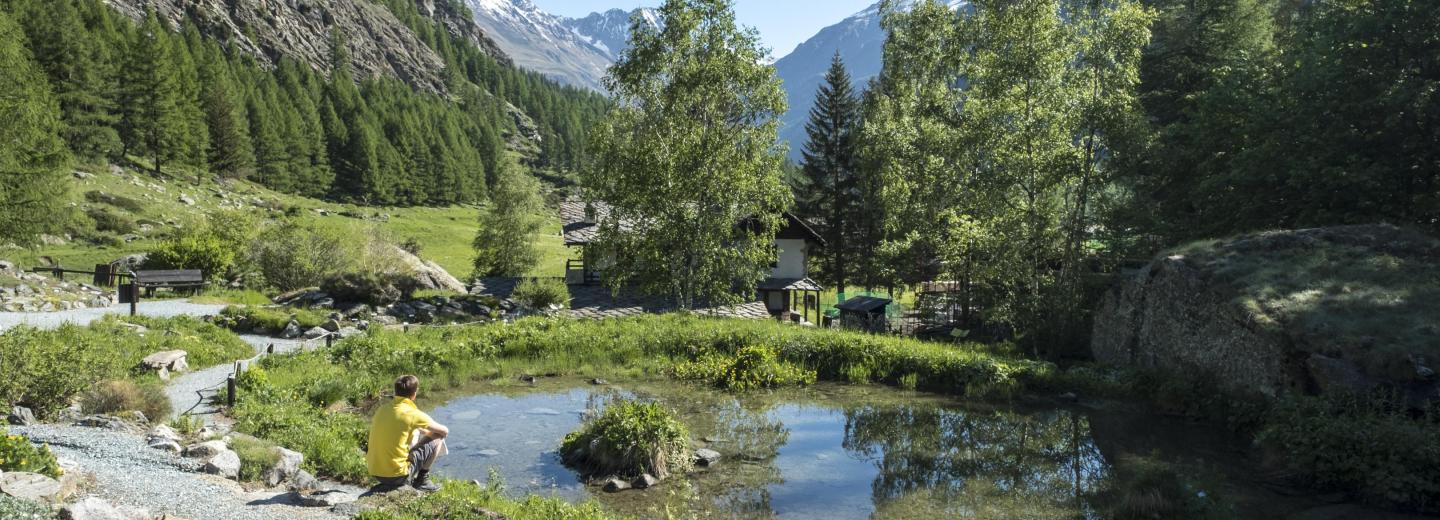
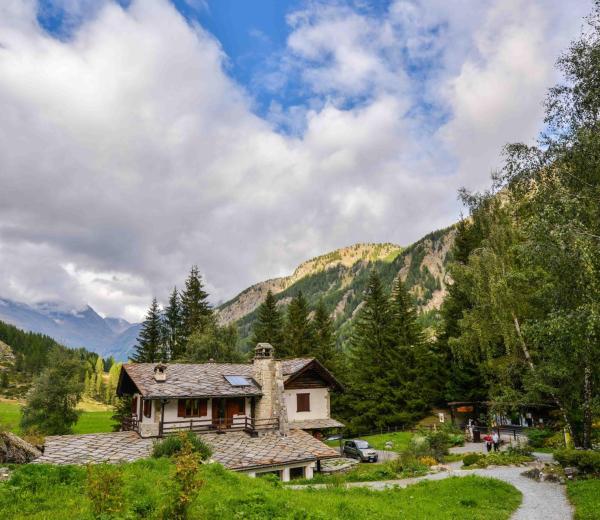
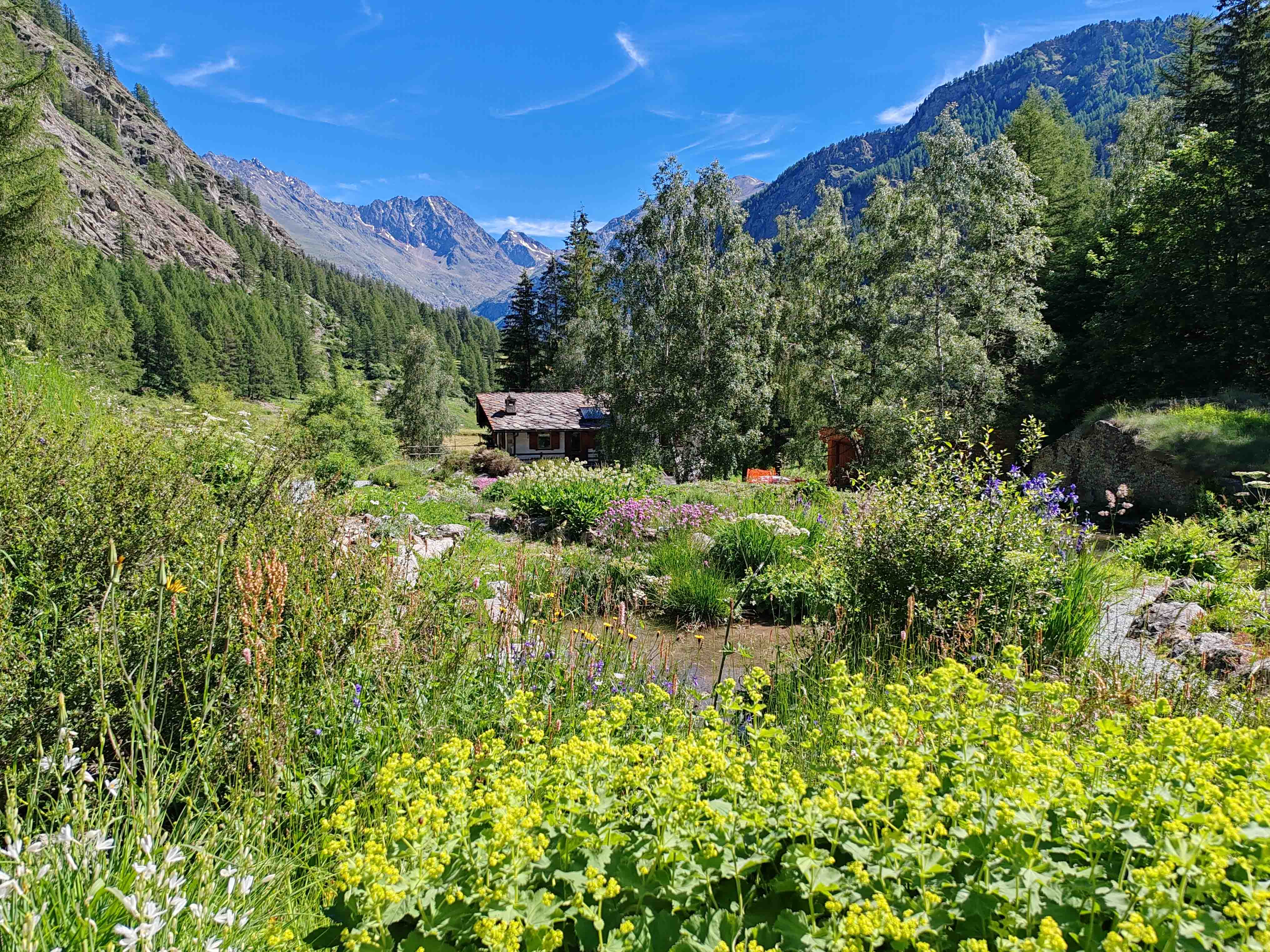
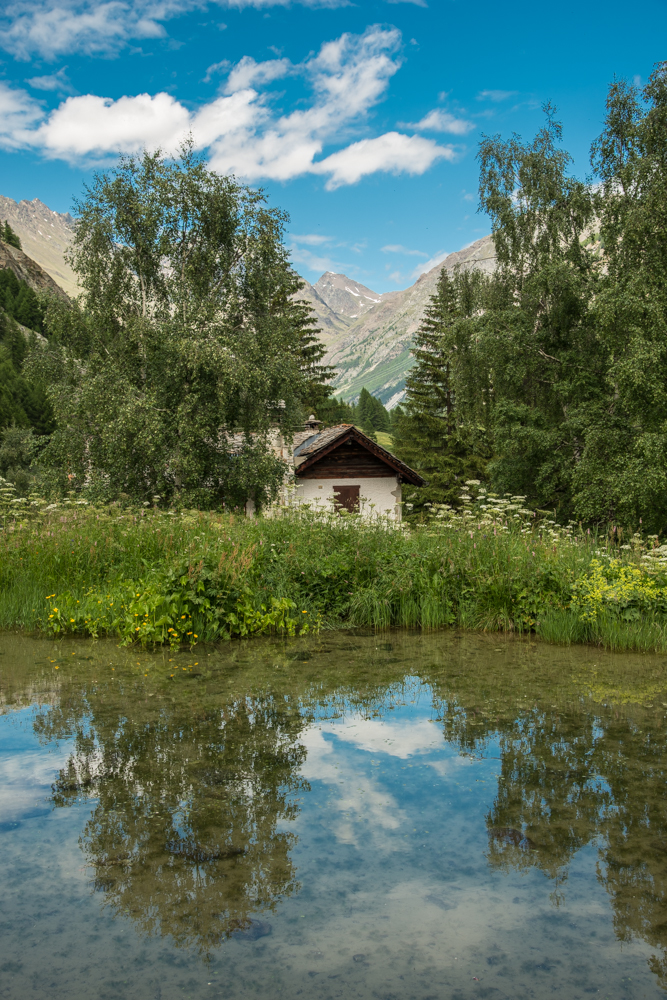
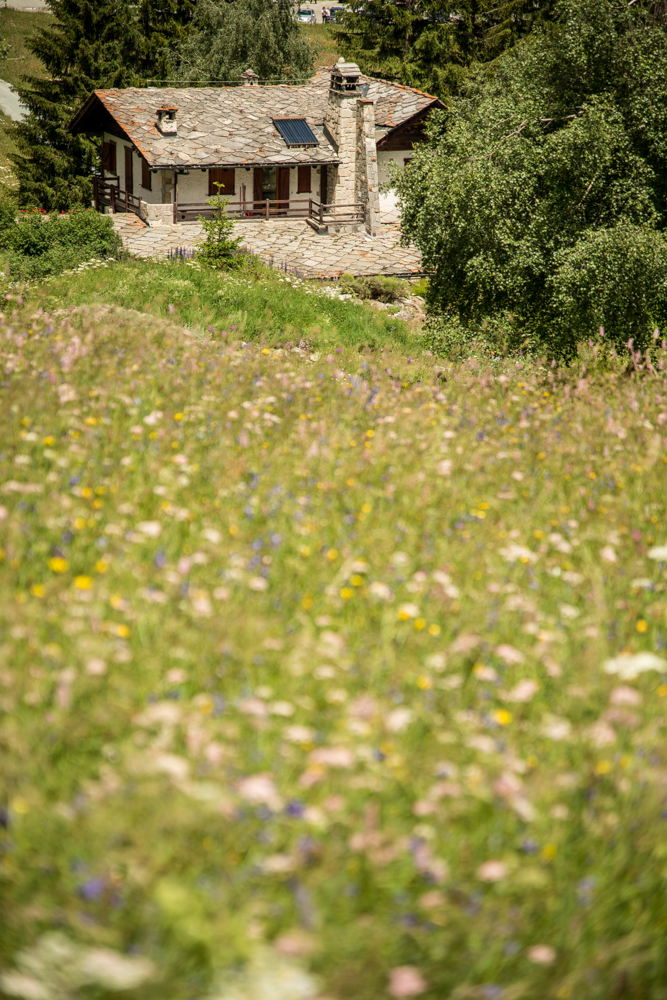
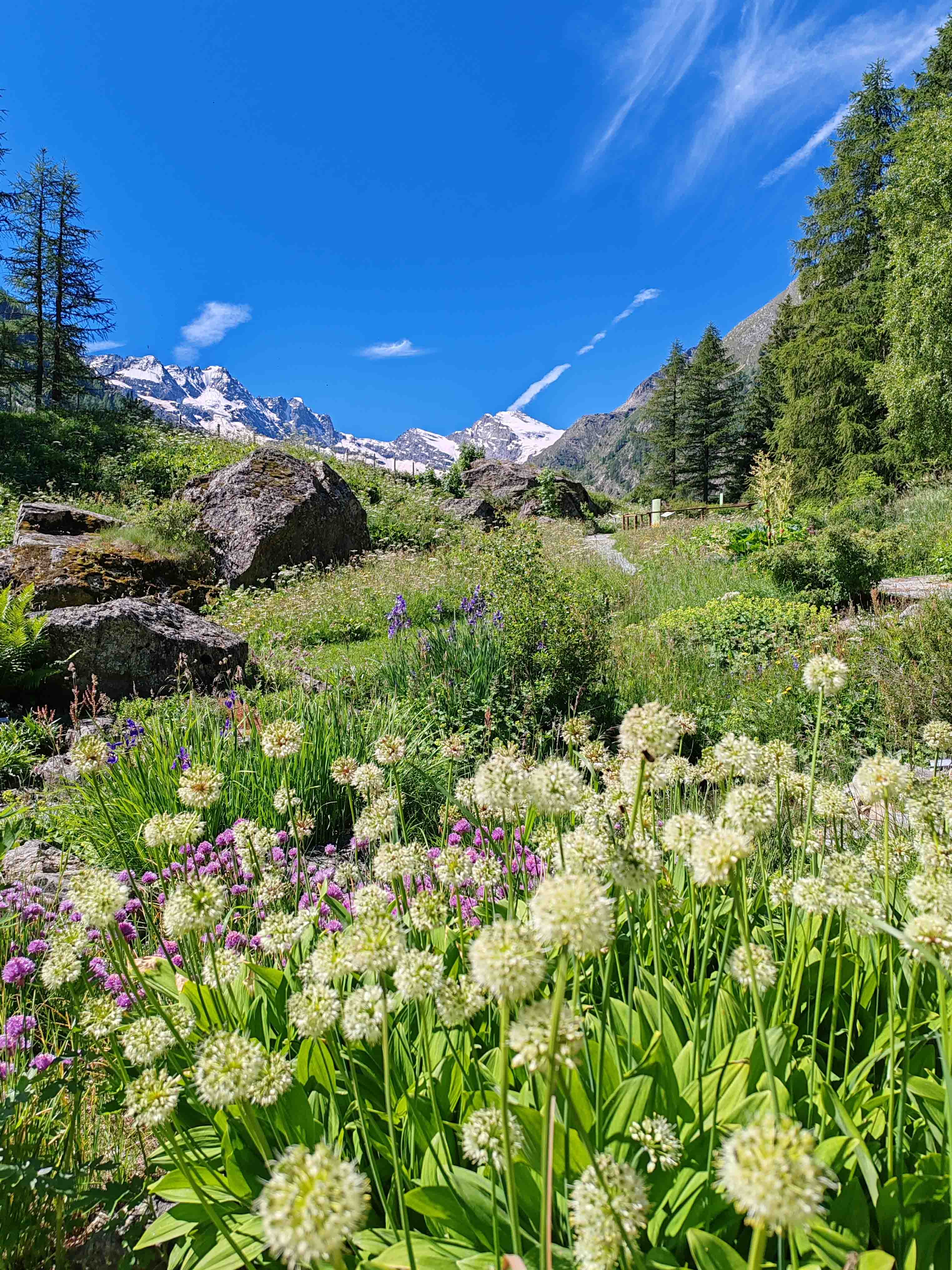
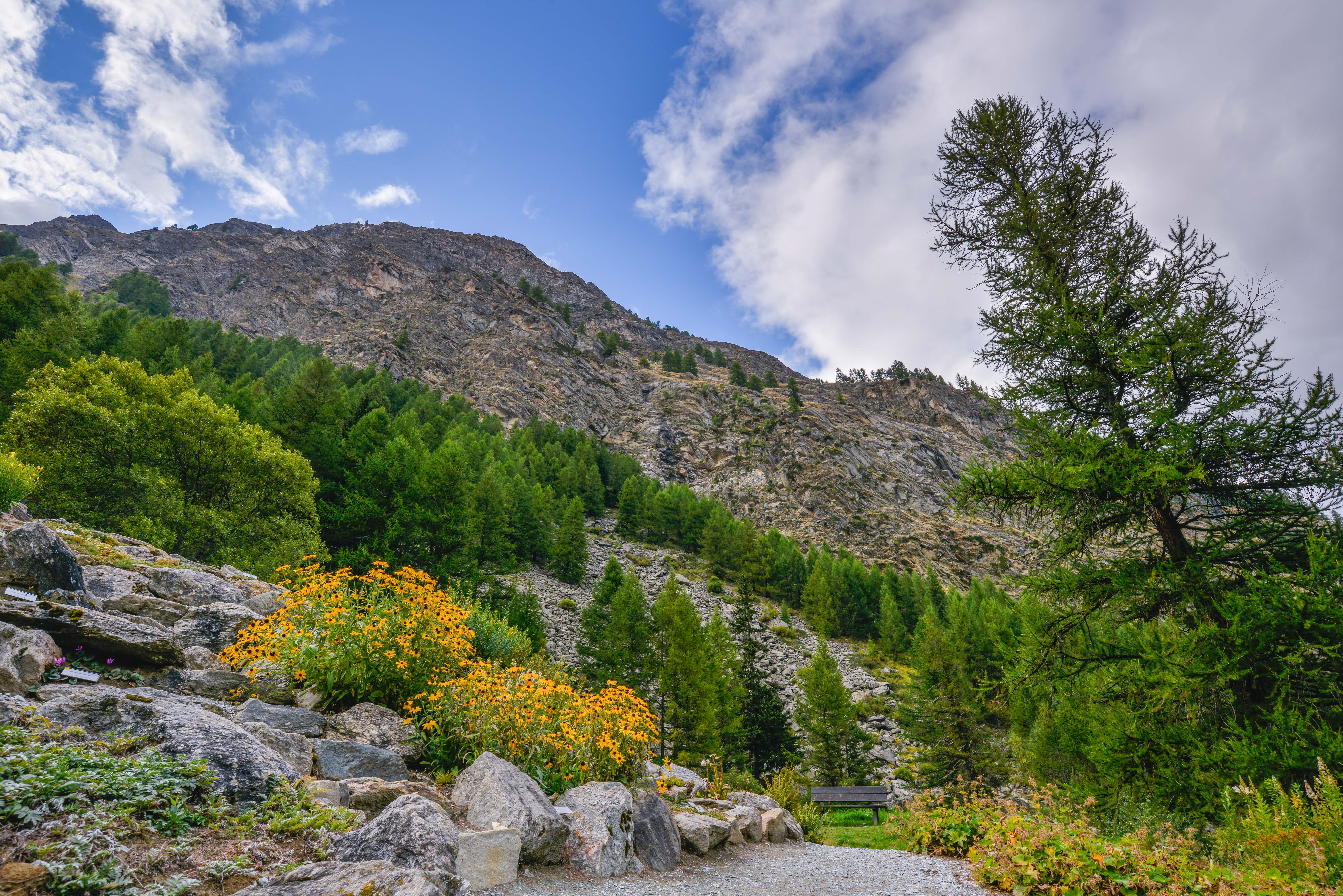
The Paradisia Alpine Botanical Garden is located in Valnontey, a hamlet of the municipality of Cogne, in the heart of the Park, at 1700 metres above sea level, on an area of about 10,000 square metres, rich in natural hollows and depressions that provide optimal conditions for the cultivation of mountain and alpine species. The garden is framed by the magnificent scenery of the Gran Paradiso massif.
How to visit Paradisia
Period of greatest flowering from mid-June to mid-July, depending on the season.
Tourist accommodation is provided in collaboration with the Bioma Association and the Park Guides.
Guided tours take place daily at set times, reservations are appreciated for groups.
Other activities are planned, such as thematic guided tours and nature games, according to the schedule drawn up by the Fondation each season.
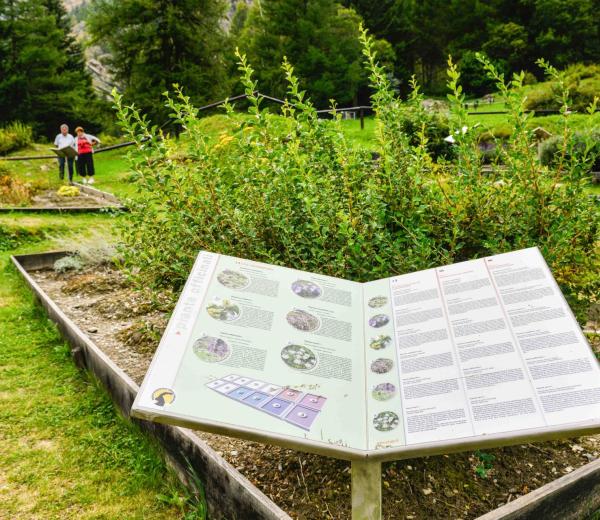
The visit can also be made independently by each visitor, as a small brochure with the main characteristics of the garden is provided at the entrance. Each plant is accompanied by a card with its name, the yellow cards indicate the plants present in Italy (Alps and Apennines), the white cards indicate exotic plants (i.e. from other mountain groups around the world), the red cards indicate medicinal plants (if they bear the death symbol, the poisonous ones). Explanatory panels illustrate the various thematic areas in the garden.
History and purpose
Paradisia, whose name does not derive, as one is easily led to believe, from the Gran Paradiso massif, but from the Mountain Lily (Paradisea liliastrum, a liliacea with delicate white flowers that grows wild in the surrounding meadows), was set up in 1955 at the behest of the Gran Paradiso National Park Board of Directors in order to enhance its flora.
The didactic-disclosure aspect is fundamental for Paradisia, in fact tourists can get closer to the plants they might encounter during an excursion, compare them with similar ones, learn their scientific name and geographical distribution and thus learn to respect them. At the same time, the garden can be a valuable reference point for botanists and naturalists in their research activities. In addition, every year Paradisia collects seeds both within the garden and in the wild, and compiles a catalogue (Index Seminum) with which exchanges are made with gardens and botanical gardens all over the world.
What you can visit
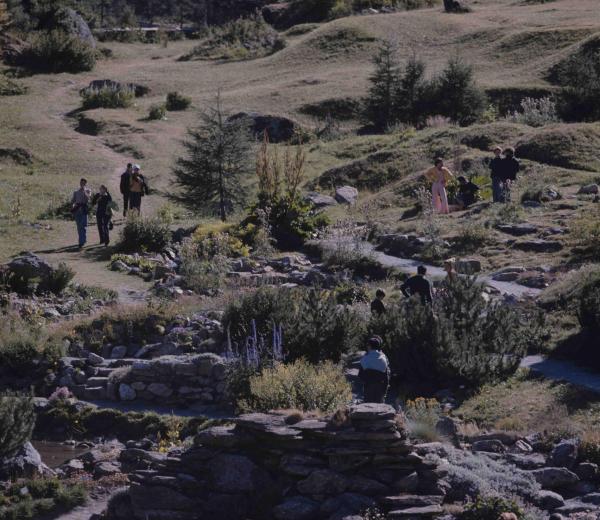
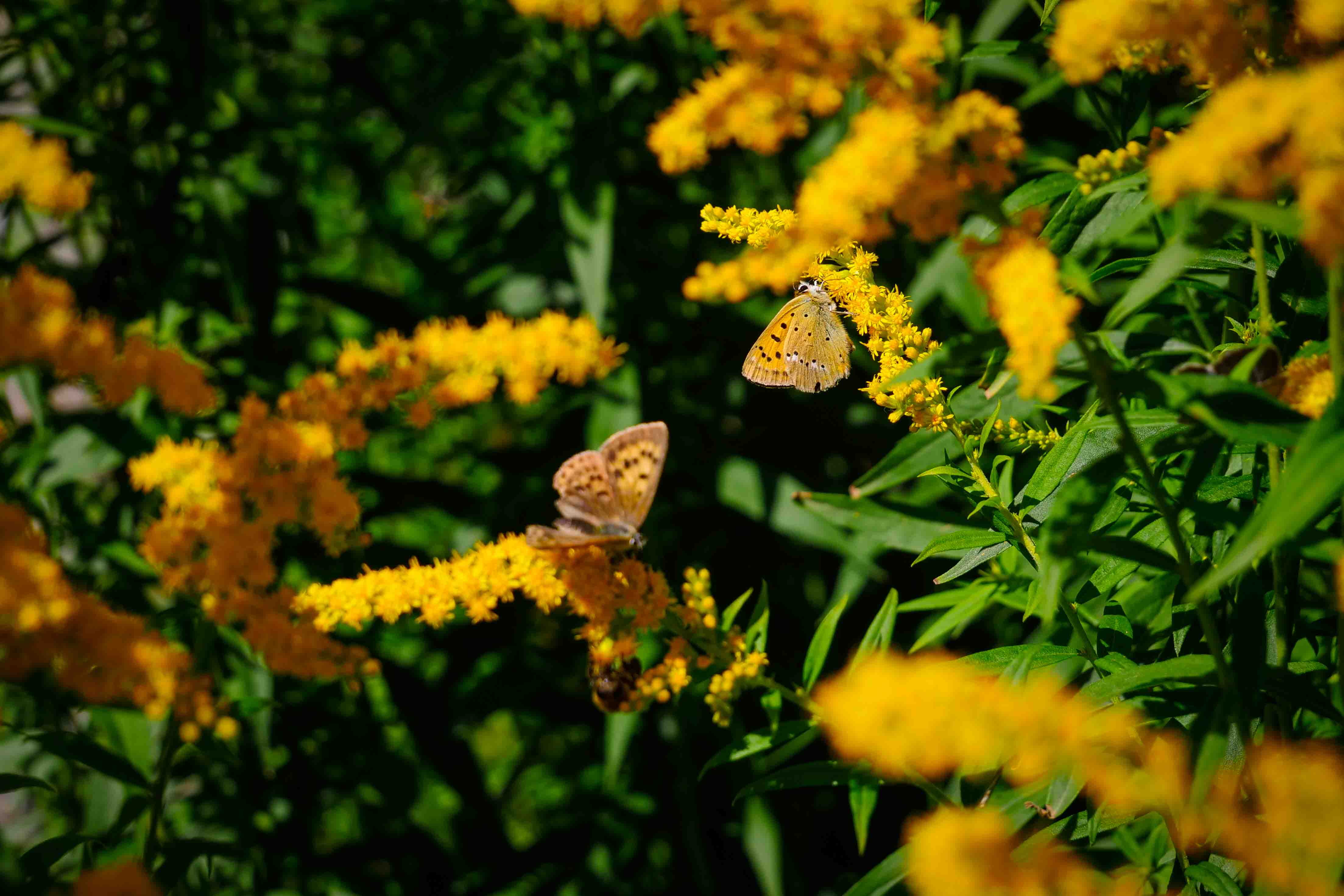
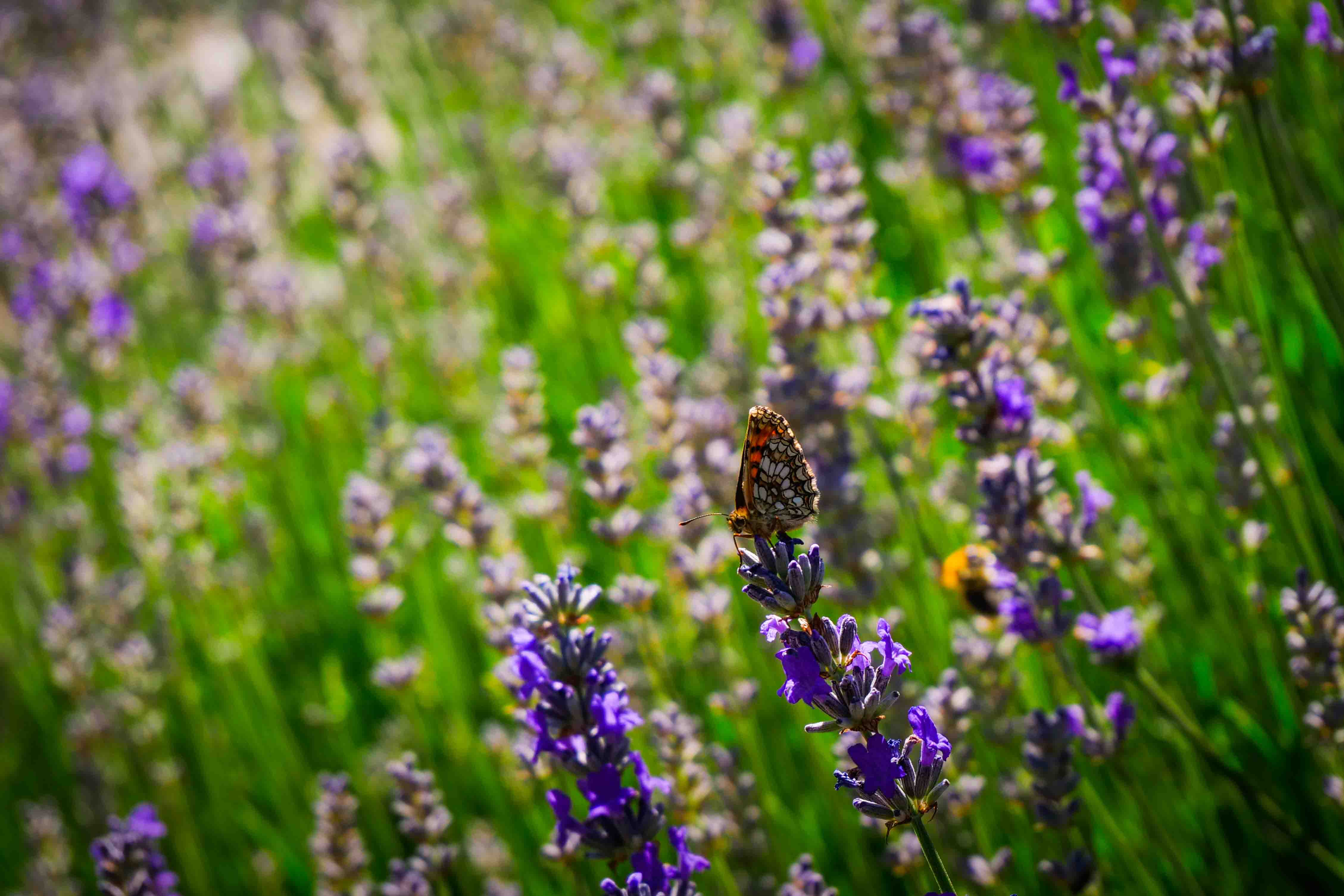
Paradisia is home to more than 1,000 different species, all collected in the wild or obtained from seed in the nursery attached to the garden itself. In addition, to satisfy the growing interest in the natural world, some patches of natural environments have been reconstructed with the plant associations that characterise them (pseudo-steppe, peat bog, detrital environment, alneto). The petrographic exhibition collects and illustrates some samples of the most significant rocks of the Cogne Valley and other areas of the Park. The exhibition of lichens, which spontaneously colonise a series of large boulders and are maintained thanks to the favourable environmental conditions and the almost total lack of pollution, is unique in its kind, bringing tourists closer to these curious living beings, an example of symbiosis between a fungus and an alga. The butterfly garden is an itinerary, in the upper part of the garden, dedicated to these insects that play a very important role as pollinators of the mountain flora. An area dedicated to the most commonly used medicinal plants in the Park's valleys is also being completed; with the help of explanatory panels, visitors will be able to recognise the main species used in the medicinal, cosmetic, liqueur and culinary sectors.
Opening hours
Open every day from 1 June 2025 to 14 September 2025, possibility of independent visits and guided tours. Reservation always recommended but not compulsory.
Opening hours: garden opening 10 a.m. Closing time June and September 5.30 p.m., July and August 6.30 p.m. Guided tours at 10.30 a.m., 2.30 p.m. and 4.30 p.m.
Events and activities at www.pngp.it/paradisia
Admission: full price ticket 3.00 euro. Reduced for students 1.50. Free for residents of the Park's municipalities, children under 10, disabled people and their carers, hiking guides.
Contact and reservations: info.paradisia@pngp.it, 347.4302875
Periodo di maggior fioritura da metà giugno a metà luglio a seconda dell'andamento stagionale.
L'accoglienza turistica è svolta, in collaborazione con l'Associazione Bioma e le Guide del Parco.
Si effettuano visite guidate tutti i giorni ad orari stabiliti, è gradita la prenotazione per i gruppi.
Sono previste altre attività, quali visite guidate tematiche, giochi naturalistici, secondo il calendario predisposto dalla Fondation ad ogni stagione.
La visita può essere fatta anche autonomamente da ogni visitatore in quanto viene fornito all'entrata un piccolo depliant con le principali caratteristiche del giardino; ogni pianta è accompagnata da un cartellino che ne riporta il nome, i cartellini gialli indicano le piante presenti in Italia (Alpi ed Appennini), quelli bianchi le piante esotiche (ovvero di altri gruppi montuosi di tutto il mondo), quelli rossi le piante officinali (se riportano il simbolo della morte quelle velenose). Alcuni pannelli esplicativi illustrano i vari settori tematici presenti nel giardino.
Paradisia, il cui nome non deriva come si è facilmente portati a credere, dal massiccio del Gran Paradiso, ma dal Giglio di monte (Paradisea liliastrum, una liliacea dai delicati fiori bianchi spontanea nelle zone prative circostanti), è sorto nel 1955 per volere del Consiglio d'Amministrazione del Parco Nazionale Gran Paradiso al fine di valorizzarne la flora.
L'aspetto didattico-divulgativo è fondamentale per Paradisia, infatti il turista può avvicinarsi alle piante che potrebbe incontrare durante un'escursione, confrontarle con altre simili, conoscerne il nome scientifico e la distribuzione geografica e quindi imparare a rispettarle. Allo stesso tempo il giardino può essere un valido punto di riferimento per botanici e naturalisti nella loro attività di ricerca. Inoltre Paradisia provvede ogni anno, mediante la raccolta di semi sia all'interno del giardino sia in natura, alla stesura di un catalogo (Index Seminum) con cui si attuano scambi con giardini e orti botanici di tutto il mondo.
Paradisia ospita più di 1000 specie diverse, tutte raccolte in natura o ottenute da seme nel vivaio annesso al giardino stesso. Inoltre per soddisfare il crescente interesse verso il mondo naturale sono stati ricostruiti alcuni lembi di ambienti naturali con le associazioni vegetali che li caratterizzano (pseudo-steppa, torbiera, ambiente detritico, alneto). L'esposizione petrografica raccoglie ed illustra alcuni campioni delle rocce più significative della Valle di Cogne e di altre zone del Parco. L'esposizione dei licheni, che colonizzano spontaneamente una serie di grossi massi e che si mantengono grazie alle favorevoli condizioni ambientali e alla quasi totale mancanza di inquinamento, è unica nel suo genere avvicinando il turista a questi curiosi esseri viventi, esempio di simbiosi tra un fungo ed un'alga. Il giardino delle farfalle è un itinerario, nella parte alta del giardino, dedicato a questi insetti che svolgono un ruolo molto importante come impollinatori della flora di montagna. È inoltre in fase di ultimazione anche un'area dedicata alle piante officinali più utilizzate nelle valli del Parco; con l'aiuto di pannelli esplicativi il visitatore potrà riconoscere le principali specie impiegate nel settore medicinale, cosmetico, liquoristico e culinario.
Paradisia riaprirà a giugno, seguici per rimanere aggiornato su tutte le novità!
Possibilità di visite in autonomia e visite guidate. Prenotazione sempre consigliata ma non obbligatoria.
Eventi e attività sul sito www.pngp.it/paradisia
Contatti e prenotazioni: info.paradisia@pngp.it, 347.4302875 dal lunedì al venerdì, 0165905794 sabato e domenica.
Foto di Enzo Massa Micon, Giordano Olivero, Michele Ottino, Luigi Avondo, Andrea Mainetti
Potrebbero interessarti anche:
